Creating a quiet and comfortable space starts with the right materials and installation techniques. Whether you’re reducing noise from traffic, neighbors, or machinery, combining a soundproof door with effective sound insulation and damping materials can make a significant difference. green glue is one of the most reliable solutions for walls, ceilings, and floors. This viscoelastic compound absorbs vibrations between rigid layers like drywall, converting them into tiny amounts of heat, and dramatically improving sound isolation. Paired with other acoustic strategies, such as properly installed doors and perimeter sealing, it creates a barrier that stops unwanted noise from disrupting daily life or work environments.
Everything You Need to Know About Green Glue
Green Glue is a viscoelastic damping compound. It absorbs vibrations between two rigid layers like drywall, converting them into tiny amounts of heat. They install it between walls, ceilings, floors. It works without removing existing materials. People use it to reduce traffic, neighbors, machinery noise.
Key points about Green Glue:
Non-toxic and safe
Compatible with drywall, plywood, other rigid boards
Easy to apply using standard caulk guns
Reduces both low and mid-frequency sound
| Feature | Description |
| Material | Viscoelastic, water-based |
| Application | Between two rigid layers |
| Benefits | Reduces vibrations, simple DIY installation |
| Best for | Walls, ceilings, floors |
How Green Glue Works
Sound travels by vibrating molecules. Rigid surfaces like walls transmit it quickly. Green Glue stops these vibrations. It’s a damping layer between two sheets. The sandwich structure prevents sound from passing.
Three main principles:
Damping – Green Glue absorbs energy from vibrations.
Mass – Extra layers of drywall resist sound movement.
Decoupling – Layers separated reduce direct sound paths.
It performs best for low-frequency noises like traffic or appliances. High frequencies also improve slightly but are less dramatic.
Tools and Materials Needed
Before installation, gather:
Green Glue Noise Proofing Compound (tubes or pails)
Drywall sheets (4′×8′ recommended)
Screws and screwdriver or drill
Utility knife
Caulk gun (28 oz)
Optional: Green Glue Whisper Clips
Having everything ready makes the process faster. They can prepare panels on the floor or sawhorses before lifting them into place.
Step-by-Step Guide to Applying Green Glue
Step 1 – Prepare Drywall and Workspace
Before applying Green Glue, remove any old wall coverings such as wallpaper, paneling, or textured finishes. Check that wall studs are secure and surfaces are level. Clear away dust, debris, or loose material. A clean and flat workspace ensures Green Glue adheres properly and performs at maximum efficiency. They can also check for moisture or mold, as these reduce soundproofing effectiveness.
Step 2 – Hang the First Layer of Drywall
Attach the first drywall layer to studs using standard screws. Ensure it sits flush against the studs. Optionally, seal seams between drywall sheets using drywall mud or caulk, making sure the sealant does not protrude above the wall surface. Any bumps, uneven mud, or drips can prevent the second layer from pressing evenly against the Green Glue, reducing its vibration-damping performance. Proper installation here increases the overall STC (Sound Transmission Class) rating.
Step 3 – Prepare Green Glue Tube
Tap the Green Glue tube on a hard surface to move the compound away from the tip and prevent accidental dripping. Cut a ¼-inch opening in the tube tip. Screw on the nozzle and cut a ¼-inch hole in the nozzle for smooth, controlled application. Insert the tube into a standard caulk gun or Green Glue dispensing gun. Proper preparation ensures the Green Glue flows evenly and can be applied quickly without interruptions.
Step 4 – Apply Green Glue
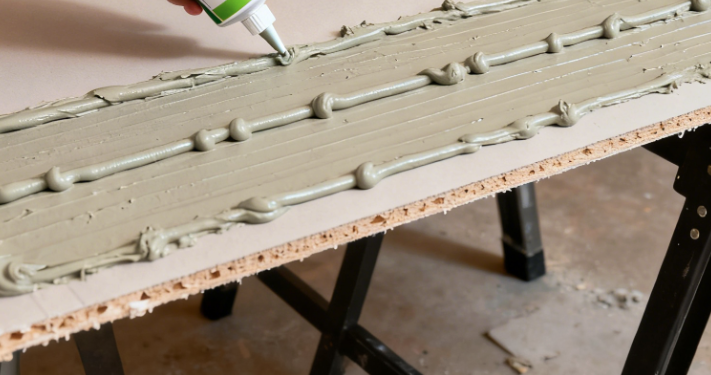
Lay the second drywall panel flat on a table, sawhorses, or the floor. Apply two tubes of Green Glue per 4′×8′ sheet. Spread the compound evenly across the panel surface. Leave a 2–3 inch border around the edges to allow easy handling and prevent smearing. The exact pattern does not matter—random bead distribution works efficiently.
Tip: If you skip mudding the first layer, stagger the seams of the second drywall layer. This ensures that seams do not line up, maximizing the damping effect of Green Glue.
Green Glue acts as a viscoelastic layer, converting vibrations into heat and dramatically reducing sound transmission between the two drywall layers. Proper coverage and placement are key to achieving optimal low-frequency noise reduction.
Step 5 – Install Second Drywall Layer
Lift the Green Glue-coated panel and press it against the first drywall layer. Use screws to fasten it to the studs. Maintain a ¼-inch gap at the top and bottom for sealing. Repeat this process for each panel. When compressed, the Green Glue layer forms a thin, continuous damping layer that reduces vibration transmission.
Installation tips:
Step 6 – Seal Edges and Gaps
Use sealant to close any openings around the perimeter, electrical outlets, light switches, and wall-floor junctions. These are critical points where sound can leak through if left unsealed. Proper edge sealing enhances the overall STC rating and ensures that Green Glue’s soundproofing potential is fully realized.
Step 7 – Drying and Curing
Green Glue begins working in 7–10 days, with significant soundproofing improvement visible in that period. Full performance, including optimal low-frequency damping, is typically reached after 30 days.
Environmental factors influence curing:
High humidity or wet conditions slow drying.
Cold temperatures reduce performance initially.
Multiple layers of drywall may extend curing time slightly.
After curing, the Green Glue layer acts as a permanent damping material, improving acoustic performance and reducing unwanted noise for years.
Tips for Maximum Performance
Do not exceed 3 tubes per sheet
Using more than 3 tubes of green glue per 4′×8′ sheet can reduce effectiveness. Too much compound can squeeze out unevenly, lowering damping efficiency and possibly causing gaps. Stick to the recommended amount for optimal soundproofing.
Apply within 15 minutes before it starts curing
green glue begins to set quickly after application. Installing the second drywall layer within 15 minutes ensures proper compression and a uniform damping layer. Delaying installation can reduce the compound’s ability to absorb vibrations.
Keep first layer smooth and free of protrusions
Any bumps, excess mud, or caulk on the first drywall layer can prevent even contact with green glue. A smooth, flat surface increases the overall STC rating and allows the damping layer to perform at its maximum potential.
Stagger seams of the second layer
Aligning seams directly over the first layer reduces noise isolation. Staggered seams help eliminate direct vibration paths, allowing green glue to absorb sound more effectively across the wall.
FAQ
Q1: What is green glue used for?
Green glue is a viscoelastic damping compound used to reduce sound transmission between walls, ceilings, and floors. It is especially effective for low-frequency noises like traffic or appliances.
Q2: Can I use green glue on existing walls?
Yes. Green glue can be applied between a new layer of drywall and an existing wall without removing the original material, making it ideal for renovations.
Q3: How many tubes of green glue should I use per drywall sheet?
For a standard 4′×8′ sheet, two tubes are recommended for general performance. Using three tubes may slightly improve low-frequency damping, but more than three tubes can reduce effectiveness.
Q4: Do I need to seal edges and gaps when using green glue?
Yes. Sealing all edges, outlets, switches, and wall-floor junctions is important to prevent sound leaks and improve the overall STC rating.
Q5: Can green glue be used on ceilings and floors?
Yes. It works on any rigid layers that can be sandwiched, including ceilings, floors, and walls.
Conclusion
Proper installation of green glue is key to achieving superior soundproofing results in walls, ceilings, and floors. By using this sound insulation and damping material along with smooth drywall surfaces, staggered seams, and careful edge sealing, you can minimize both low- and mid-frequency noise in residential, commercial, or industrial spaces.
For businesses and homeowners looking for reliable acoustic solutions, Guangzhou Winego Acoustical Materials Co., Ltd offers high-quality green glue and other soundproofing products designed to deliver lasting performance. Their materials help create quieter, more comfortable environments while simplifying the installation process.