Structural soundproofing presents extremely high stakes for any residential renovation or commercial build. Opening up finished walls or lifting installed floors proves wildly expensive and labor-intensive. It fundamentally leaves no room for trial and error. Far too often, buyers fall into a costly trap. People frequently confuse sound absorption with actual sound isolation. Absorption merely improves internal room acoustics. Isolation stops noise from entering or leaving a space entirely. This common misunderstanding routinely leads to wasted budgets on the wrong products. You cannot fix a loud neighbor by simply gluing cheap foam to your wall.
Our primary goal here is to provide an evidence-based, side-by-side evaluation. We will thoroughly compare sound insulation felt and mass loaded vinyl (MLV). This comparison helps clear up industry confusion. You will learn exactly how to choose the right barrier for airborne, structure-borne, and impact noise. We want you to feel confident in your final procurement decisions.
Key Takeaways
MLV for Airborne Noise: Mass loaded vinyl is a dense, limp barrier designed to block airborne sounds (voices, TV) by adding mass to wall assemblies.
Felt for Impact Noise: Sound insulation felt acts as a decoupling layer and vibration absorber, making it superior for under-floor applications to dampen footsteps.
Installation is Everything: Both materials lose their efficacy if structural flanking occurs; proper sealing and slack hanging (for MLV) are non-negotiable.
Holistic Systems Win: True soundproofing requires a combination of mass, decoupling, and absorption—often pairing these materials with specialized drywall, damping compounds, and sealed entryways.
The Physics of Sound Transmission: Setting the Evaluation Criteria
Think of sound behaving exactly like water. It always seeks the path of least resistance. We must clearly distinguish between treating a room and proofing a room. Absorption materials act like sponges. They soak up echoes and reverberations inside a specific room. However, they do not stop noise from traveling through a wall. Conversely, actual soundproofing materials act like dense dams. We need these heavy dams to block acoustic transmission entirely.
We face two distinct enemies in acoustic design. First, airborne noise travels easily through the air. This category includes loud music, casual talking, and television dialogue. Stopping airborne transmission demands serious physical mass. Second, structure-borne or impact noise behaves differently. This category includes heavy footsteps, dropping objects, or slamming doors. These vibrations travel straight through physical studs, joists, and floorboards. Dealing with impact noise requires structural decoupling.
Industry professionals rely on specific, standardized frameworks to measure success. You must understand these metrics.
STC (Sound Transmission Class): This metric measures how well a partition blocks airborne noise. Higher numbers indicate better wall insulation. Most modern building codes require a minimum STC of 50 for multi-family demising walls.
IIC (Impact Insulation Class): This metric evaluates a floor assembly's resistance to impact noise. Higher numbers mean quieter floors for the occupants living below.
Always diagnose your specific noise problem before buying materials. Ask yourself if you hear voices (airborne) or feel vibrations (structure-borne) to determine your path forward.
Mass Loaded Vinyl (MLV): The Heavyweight Barrier for Airborne Noise
Mass loaded vinyl is a high-density, highly flexible sheet. Manufacturers typically infuse it with heavy mineral compounds. They primarily use calcium carbonate or barium sulfate. This unique composition makes it incredibly heavy but keeps it flexible. It works on the proven acoustic principle of "limp mass." It safely dissipates acoustic energy. It does not conduct vibrations like a rigid sheet of standard drywall does.
It represents an exceptional upgrade when selecting soundproofing materials for walls. You see it heavily utilized on lightweight steel stud framing. You can also wrap noisy plumbing pipes to quiet rushing water. Installers frequently use it to seal mechanical (MEP) rooms from adjoining office spaces.
Let us look closely at the performance realities.
Pros: It consistently adds 5 to 10 STC points to standard wall assemblies. Field results remain highly predictable. It blocks a wide range of vocal frequencies excellently without requiring thick wall frames.
Cons: The rolls weigh an immense amount. Solo installation proves incredibly difficult and often unsafe. It features relatively low tear strength. It acts entirely ineffectively against heavy impact noises from above.
MLV perfectly suits buyers trying to block medium-to-high frequency airborne noise. You can achieve excellent results without losing valuable room square footage. It prevents you from needing thick double-stud wall framing.
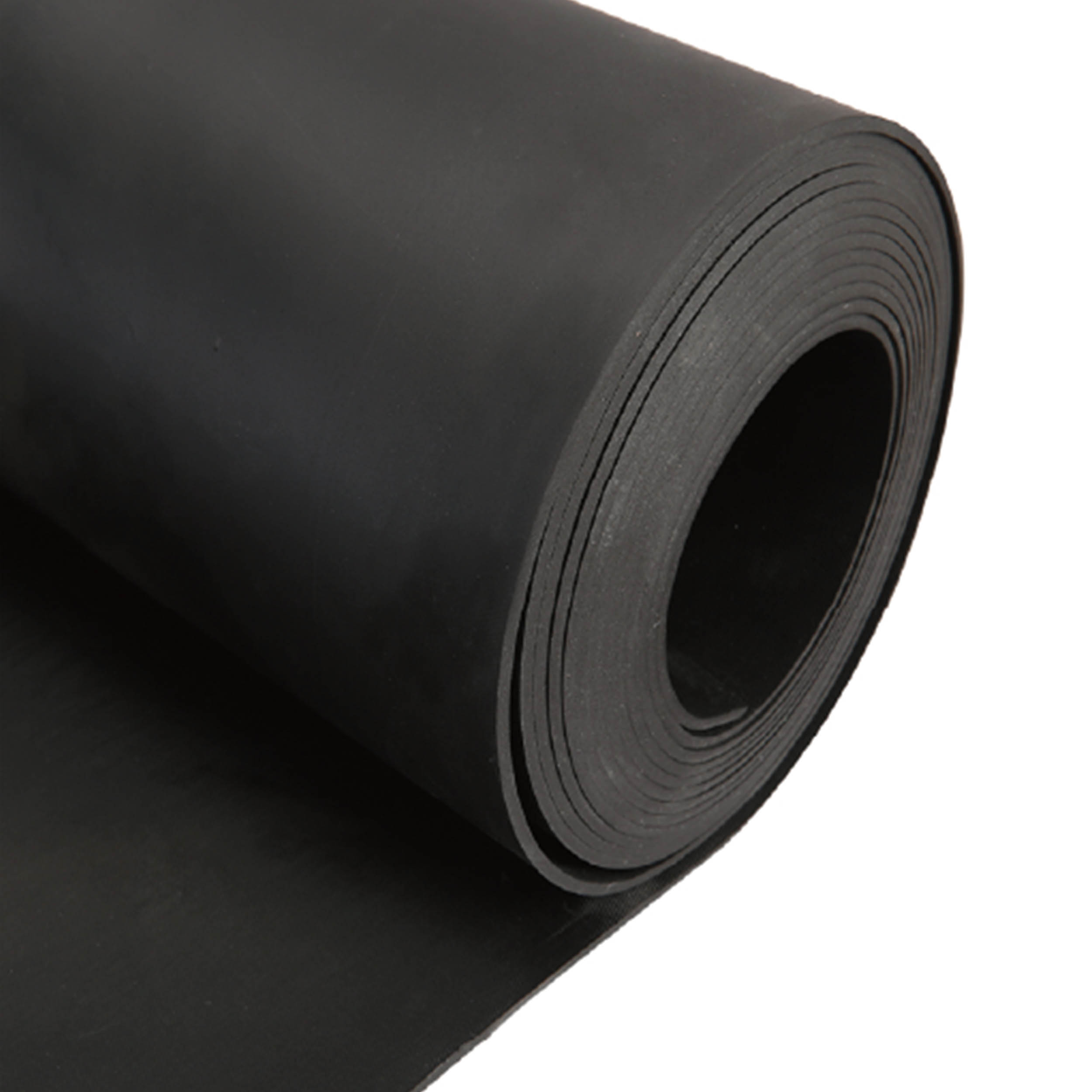
Sound Insulation Felt: The Decoupling Champion for Floors and Vibrations
This material features a high-density, porous acoustic composition. Unlike MLV, which relies purely on blocking via sheer mass, dense sound insulation felt functions distinctly. It acts as an efficient Vibration Absorber. It actively converts kinetic vibrational energy into harmless, microscopic heat. It stops the transfer of energy between hard surfaces.
Builders frequently deploy it as a premium floor underlayment. You will find it situated directly under hardwood or engineered flooring. It dramatically mitigates harsh foot traffic noise. Installers also use it as a robust damping layer within partition walls. It actively prevents direct rigid surface-to-surface contact between wooden studs and external drywall boards.
Consider these performance realities before purchasing.
Pros: It excels at raising IIC ratings for residential floors. Installers find it vastly easier to cut and maneuver than heavy MLV. Many top brands utilize eco-friendly, recycled PET plastics.
Cons: It lacks the raw physical density necessary to stop heavy airborne noise alone. It remains highly vulnerable to structural moisture. You must not apply it in basements without an adequate vapor barrier.
This material serves condo owners perfectly. It helps them meet strict HOA flooring impact standards. It also shines as a complementary decoupling layer inside a broader, multi-material soundproofing strategy.
Head-to-Head Comparison: Wall and Floor Scenarios
When we evaluate these materials side by side, specific application contexts dictate the clear winner. You cannot simply substitute one for the other.
For walls, MLV dramatically outperforms felt. Consider a scenario where you layer MLV behind a rigid Sound Insulation Board. This combination effectively halts airborne transmission in its tracks. By contrast, felt yields only marginal benefits inside standard walls. It pales in comparison to implementing proper air-gap decoupling.
For floors, felt easily outperforms MLV. Sliding MLV under a hard floor adds raw mass. However, it does incredibly little to cushion the harsh physical impact of a sudden heel strike. Felt provides the necessary physical "give" to properly isolate the vibration before it hits the joists.
Achieving maximum STC and IIC ratings requires combining mass and damping. High-end home theaters or professional recording studios demand this exact hybrid approach.
Apply MLV directly against the bare wall studs to establish initial mass.
Decouple the wall structure utilizing metal resilient channels.
Install the first layer of heavy acoustic drywall.
Apply viscoelastic damping compounds like Green Glue across the drywall surface.
Seal the assembly using a second layer of drywall.
Review this quick breakdown of their core functions.
Application Feature | Mass Loaded Vinyl (MLV) | Sound Insulation Felt |
Primary Acoustic Function | Adding dense, limp mass | Decoupling and vibration damping |
Targeted Noise Type | Airborne (Voices, TV, Music) | Impact (Footsteps, Dropped items) |
Best Building Location | Walls, ceilings, and pipe wraps | Floors and partition gaps |
Key Metric Improved | STC (Sound Transmission Class) | IIC (Impact Insulation Class) |
Installation Difficulty | High (Requires multiple people) | Low to Medium (Easy to cut) |
Implementation Risks: Avoiding the "Flanking" Trap
Even the most expensive acoustic materials fail if you install them incorrectly. Sound flanking occurs when noise simply travels around your expensive barriers.
Installation dictates MLV performance entirely. You must hang it loosely. Pulling it drum-tight destroys its core limpness. Think of a tight drum skin. If it is tight, it bounces sound. If it hangs loose like a heavy curtain, it absorbs the acoustic blow. Rigidly sandwiching it between two hard sheets of drywall drastically reduces its sound-blocking ability. It must hang with a slight slack.
MLV weight presents a massive challenge over time. Gravity will continually pull it down. You must use broad pneumatic staples. Alternatively, secure it using screws paired with large plastic washers. These specific practices prevent the heavy material from tearing completely off the bare studs.
Precision remains strictly non-negotiable. A mere 1% gap in your wall lets in an astonishing 50% of external noise. Installers must apply acoustic caulk around electrical outlets. You must apply robust seam tape across every material joint.
Soundproofing a wall proves fundamentally useless if your entry door remains hollow. You must upgrade your entryway. Installing a heavy, tightly sealed Soundproof Door fixes this. Ensure it features high-quality bottom sweeps and perimeter gaskets. This forms a mandatory companion project for any serious room isolation.
Making the right financial choice requires evaluating your core acoustic needs against your material budget.
Standard 1 lb/sq ft MLV generally costs $1.00 to $2.00 per square foot. High-performance 2 lb variations cost significantly more. You must assess if your budget comfortably supports this expense across your entire square footage. You also need to account for heavy freight shipping charges. Its extreme weight adds up quickly during transit.
Professional acousticians often advise healthy skepticism regarding standard residential applications. Sometimes, implementing a second layer of thick 5/8" drywall yields superior results. Pairing that drywall layer with specialized damping adhesives often delivers a much better STC-per-dollar ratio than simply relying on MLV alone. You must weigh the labor costs of drywall against the material costs of MLV.
Felt remains highly cost-effective for achieving strict flooring compliance. It is generally cheaper to ship. When comparing different felt options, prioritize products based on their core density (kg/m³). Furthermore, verify their compression recovery rates. High recovery ensures the material will not permanently crush under heavy furniture loads over time.
Conclusion
Proper soundproofing requires precise material selection based on solid acoustic physics. Guesswork simply wastes your money.
Final Verdict: Choose mass loaded vinyl to confidently block airborne sound from escaping or entering walls. Conversely, rely on sound insulation felt to effectively decouple impact vibrations, primarily in flooring assemblies.
Assess Your Weak Links: Remember that acoustic flanking ruins great materials. Always seal your electrical boxes and upgrade your doors before expecting perfect silence.
Next Steps: Precisely measure your target square footage today. Verify your structural load capacity before ordering MLV, given its immense weight. Finally, consult your local building codes regarding required fire ratings (such as ASTM E84 Class A) before placing any bulk material orders.
FAQ
Q: Can I use acoustic foam panels instead of MLV or felt?
A: No. Foam only treats internal room acoustics. It reduces interior echo and reverberation. It does not possess the mass or structural density required to stop noise from traveling through a physical wall structure.
Q: Should I use MLV or Green Glue?
A: They perform distinctly different functions. MLV adds limp mass to physically block airborne noise. Green Glue adds viscoelastic damping to dissipate vibration occurring between rigid drywall boards. High-end soundproofing setups frequently utilize both together for maximum results.
Q: Is sound insulation felt safe for indoor use?
A: Yes. Most modern acoustic felts feature recycled PET plastics or safe synthetic fibers. They generally maintain low-VOC emissions and resist mold. However, you should always verify the manufacturer's specific environmental certifications prior to purchase.